
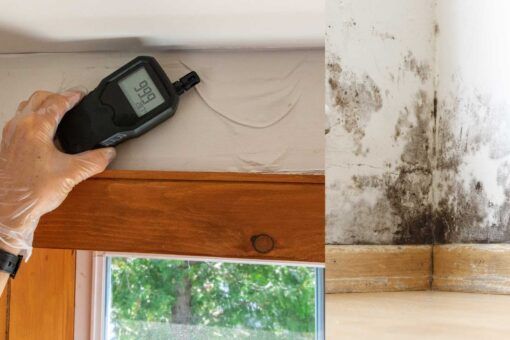
What should I do if I find damp, mould or too much condensation in my home?
If you have damp, mould or an increase in condensation in your home, please get in touch as soon as possible.
You can report damp and mould:
- online
- by phone 0300 003 7007 and select option 1
- by email propertyservices@glh.org.uk
If you can – take photos straightaway of the damp and mould in your home and show these to us when we visit to inspect your home.
You can also email your photos to propertyservices@glh.org.uk
What will happen once I’ve reported damp and mould?
All damp and mould requests are put into two categories and have set repair response timeframes:
- Category 1 – Emergency hazard
- Category 2 – Significant hazard
Once we identify the cause of the damp and mould, we will discuss with you what work needs to be completed and book in the necessary repairs work.
This work will be prioritised on a risk basis. If there are significant risks to you or your family’s health we will look to act urgently. If this is not possible, we may need to arrange with you a temporary move to another property whilst the work is carried out.
We may book a visit to come out to inspect your home at a time that is convenient for you, to find out what the cause of the damp and mould is and what work might be required.
Being at home for your appointments helps us put things right faster and prevents the problem from getting worse.
If needed, we will
- complete repair work to fix any structural or plumbing issues.
- make improvements to the ventilation in your home (for example, installing extractor fans in your kitchen and bathroom).
- use a mould treatment
If we carry out work to your home, we will contact you after these have been completed to check that the damp or mould has not returned.
How does mould start?
Mould is a type of fungus that grows on damp surfaces.
Damp and cold homes can cause mould which can increase the risk of respiratory problems.
What is damp?
Damp means when something is slightly wet. Damp can cause mould on windows, walls and furniture.
What causes damp in my home?
- Leaking pipes, wastes or overflows
- Rain which gets into our homes through the roof where a tile or slate is missing
- Blocked guttering and cracked or loose rainwater pipes
- Rising damp – this is a problem with the damp course. It causes a yellow tide mark on walls inside your home.
What is condensation?
Condensation is tiny droplets of water. It happens when hot and cold air come together. Condensation can look like water, steam or mist. You may notice it when you see your breath on a cold day, or when the mirror mists over when you have a bath or shower.
There is always some moisture in the air, even if you can’t see it, but if the air gets colder, this causes tiny drops of water to appear on cold surfaces.
You can usually find it behind or in cupboards or wardrobes or around windows.
Condensation can turn into mould
Too much condensation is the main cause of black mould. Mould is harmful to your health.
What can I do to help prevent damp, condensation and mould in my home?
- Open windows or trickle vents to let moisture out of your home (ideally in the morning and throughout the day when cooking or bathing).
- Wipe windows and window sills to remove condensation.
- Dry clothes outside, or in the bathroom with an extractor fan on, or open the bathroom window.
- Keep your home warm. (ideally at a temperature of around 18C)
- Cover pans when cooking.
Awaab’s Law
Awaab’s Law is named in memory of Awaab Ishak, a young child who sadly died because of mould in his home. His story brought important changes to the law to help make sure something like this never happens again.
Under this law, social landlords must act quickly when damp or mould poses a serious risk, putting your safety and wellbeing first.
If you report damp and mould to us, we must:
| Make sure your home is safe – we’ll check for any emergencies (called Category 1 hazards) | Within 24 hours. |
| Investigate the problem – we’ll assess the damp or mould and any other issues (Category 2 hazards) | Within 10 working days. |
| Tell you what we found – we’ll send you a written summary of our inspection and next steps | Within 3 working days. |
| Start repairs – if we find a serious hazard or significant risk | Within 5 working days of our investigation. |
| Finish the work – all recommended work will be completed | Within 12 weeks (90 days). |
| Provide temporary accommodation – if your home can’t be made safe | Within 24 hours for emergencies, or 5 working days for significant risks. |